Crowns
Protect and rebuild severely worn, fractured or heavily restored teeth while restoring appropriate shape and height.
 Book a consultation
Full-mouth rehabilitation
Full-mouth rehabilitation combines crowns and bridges to restore comfort, appearance and a stable bite across the mouth. Dental implants may be used to replace selected missing teeth—but they are optional, not automatic.
More than a smile makeover
A single crown restores one tooth. Full-mouth rehabilitation looks at how all the teeth work together—how they meet, guide jaw movement, support the face and distribute chewing forces.
Treatment may involve a combination of crowns, bridges, selected veneers or onlays, gum care and replacement of missing teeth. Healthy or predictably restorable teeth are preserved wherever possible; not every tooth necessarily needs a crown.
The aim is not simply to make teeth look whiter. It is to create a maintainable result that feels comfortable, functions predictably and suits the patient’s face.
A tailored combination
Protect and rebuild severely worn, fractured or heavily restored teeth while restoring appropriate shape and height.
Replace selected missing teeth by connecting the replacement tooth to suitable neighbouring teeth.
An optional way to replace missing teeth without relying on adjacent teeth. Their use depends on bone, health, space and preference.
Onlays, veneers or direct restorations may be considered where less tooth coverage is sufficient.
Two different full-mouth solutions
Best suited when many natural teeth can still be predictably restored. Crowns and bridges rebuild the existing dentition; implants are added only where useful.
Natural teeth remain central to the plan.Considered when most or all teeth in an arch are missing or cannot be predictably retained. A complete fixed bridge is supported by implants.
Explore full-arch implants →The treatment journey
A complex rehabilitation is usually completed across several appointments and phases. The sequence is adapted to the condition of your teeth and your priorities.
We examine the teeth, gums, bite, jaw joints, existing restorations and missing teeth, supported by photographs, digital scans and X-rays where required.
Active disease and urgent concerns are addressed first. We identify which teeth can be preserved, which need protection and which spaces should be replaced.
Digital planning helps us study tooth proportions, the bite and available space. The proposed result may be previewed before definitive treatment begins.
Temporary restorations allow us to evaluate appearance, speech, comfort and function. Adjustments can be made before the final teeth are produced.
Crowns, bridges and other restorations are delivered according to the agreed sequence. Implants are included only when appropriate for missing teeth.
The final bite is reviewed and a personalised maintenance plan is arranged. This may include a protective night guard and regular hygiene visits.
Why provisional teeth matter
Provisional restorations provide a working preview of the proposed tooth shape and bite. They give you and the clinical team time to assess comfort, chewing, speech, tooth display and cleaning access.
This test phase is especially valuable when worn teeth are being lengthened or the bite is being reorganised. Feedback and necessary adjustments can be incorporated before the definitive crowns and bridges are made.
Before & after
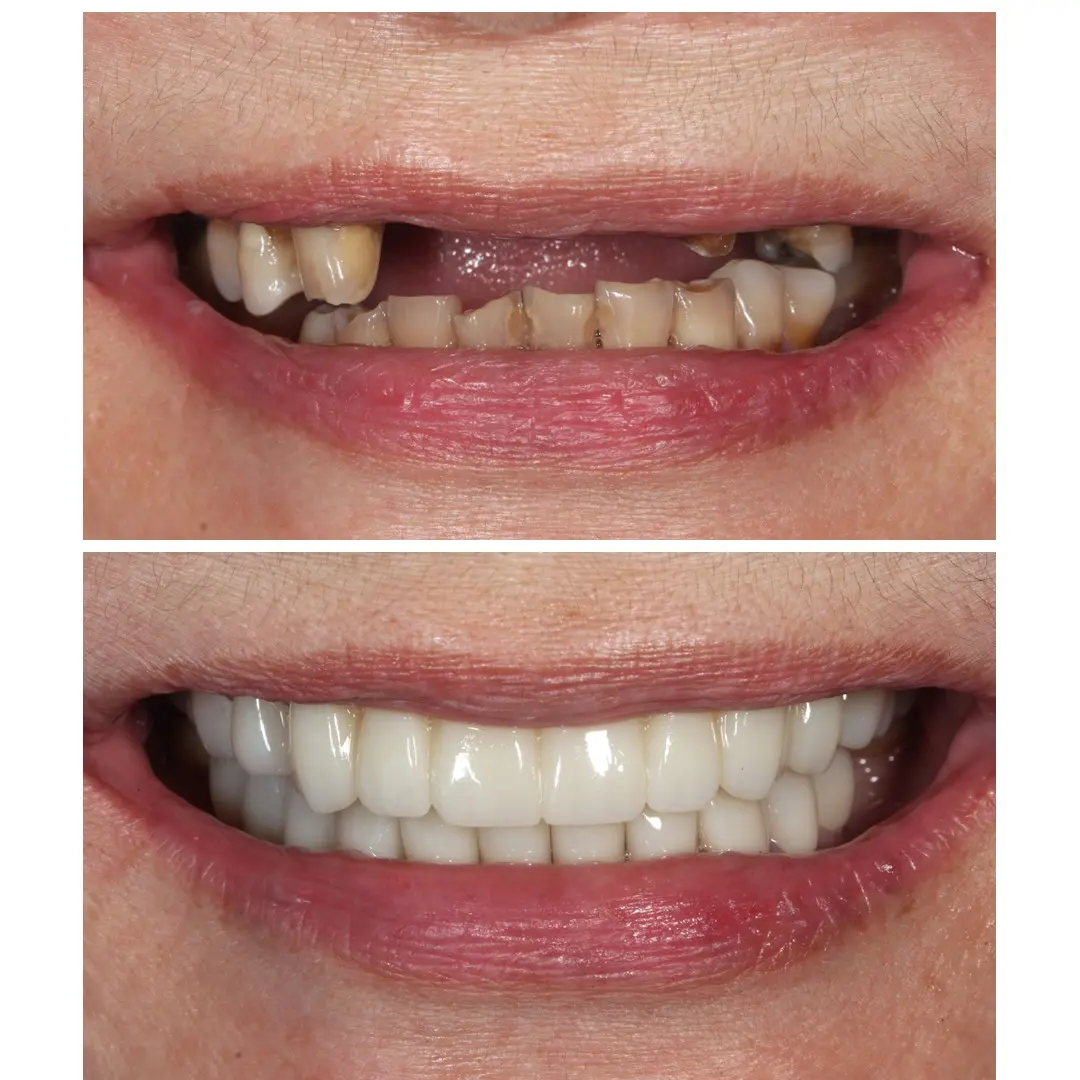
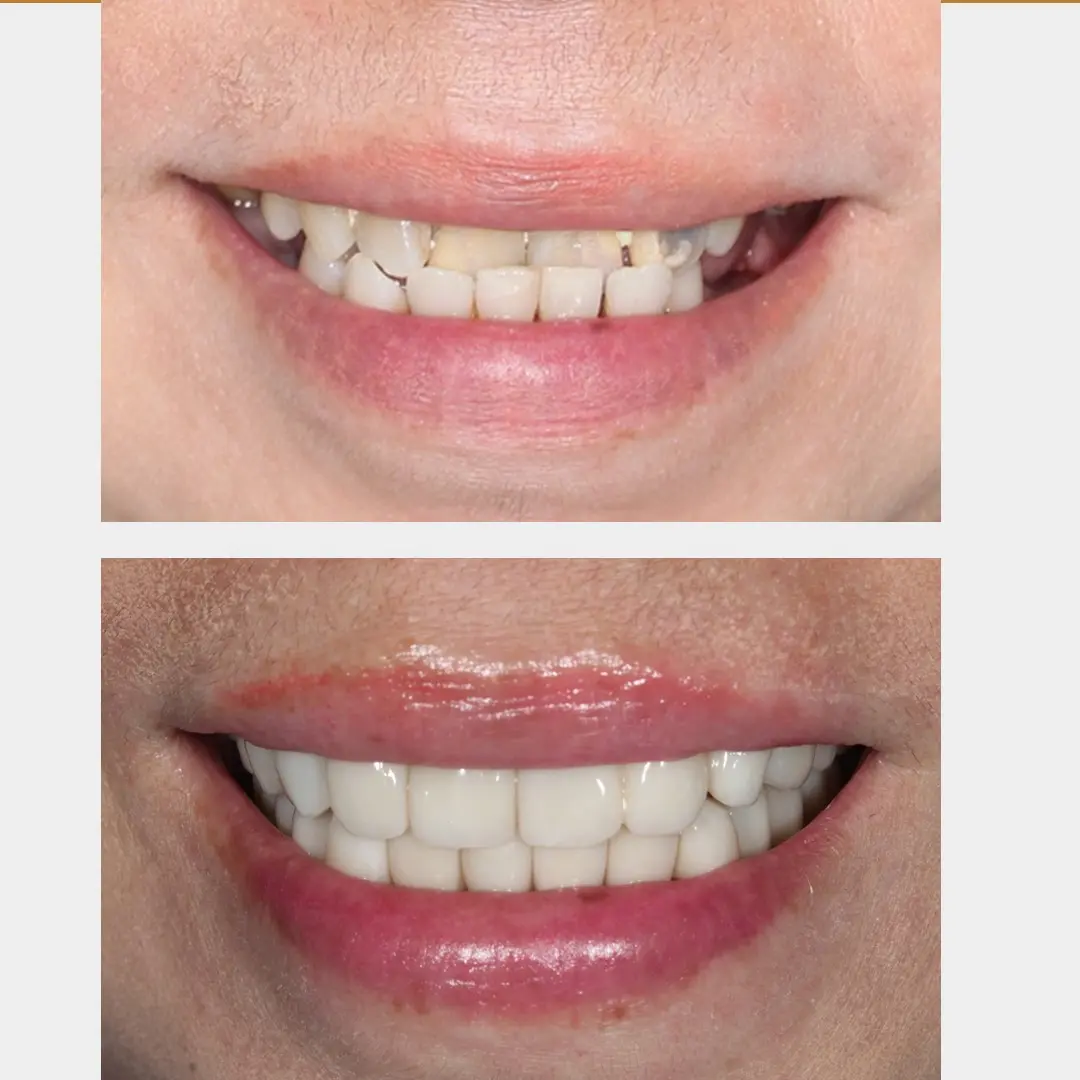
These are documented Artizen patient cases. Treatment combinations differ according to the condition of the teeth, missing spaces, bite and patient goals. Individual results vary.
Restoring tooth display, continuity and a more balanced smile with a coordinated crown-and-bridge plan.
Before & afterA comprehensive rehabilitation designed around the patient’s remaining teeth, smile and functional needs.
 Before & after
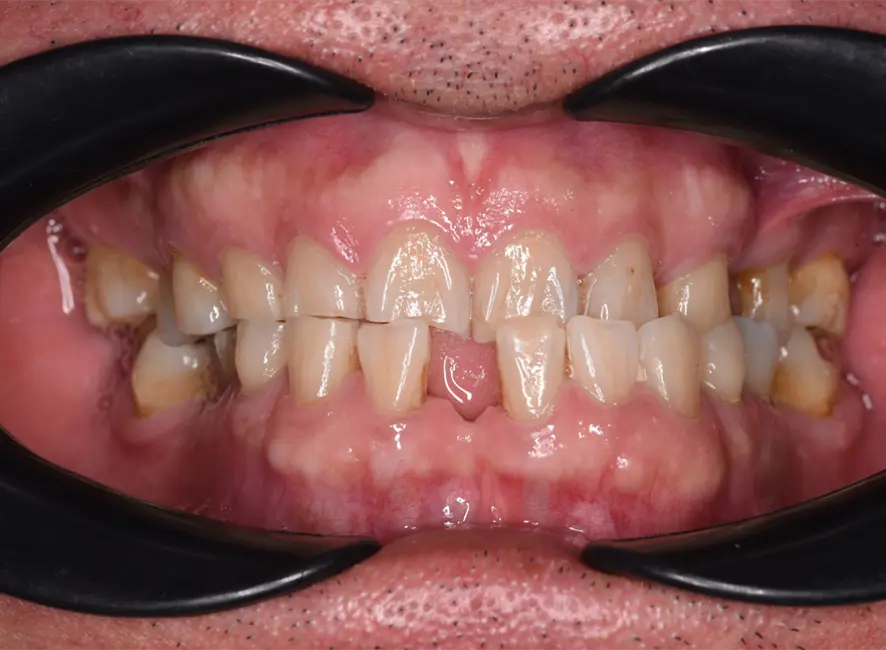
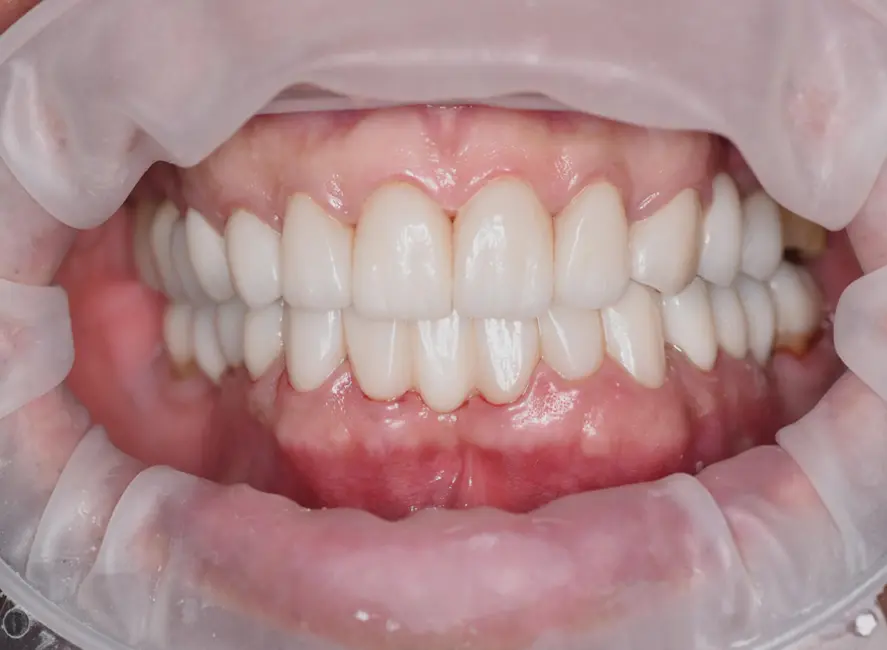
The detailed intraoral records show how tooth form, alignment and the bite were reconstructed across both arches.
When is it considered?
Clinical focus
Dr Hoe completed his Master’s degree in Clinical Dentistry at King’s College London with a focus in prosthodontics—the restoration of damaged and missing teeth. His areas of expertise include full-mouth rehabilitation and dental implants.