Improve alignment
Correct crowding, spacing and rotated teeth to create a more harmonious dental arch.
 Book a consultation
Orthodontic treatment
Orthodontics can improve tooth alignment, bite relationships, cleaning access and the space available for future restorations. At Artizen Dental, treatment may be provided independently or as one stage of a broader full-mouth rehabilitation.
Understanding the treatment
An orthodontic assessment considers more than whether teeth look straight. We study crowding, spacing, jaw relationships, gum health, tooth wear and how the upper and lower teeth meet.
We offer fixed braces and clear aligner treatment, including Angel Aligner. The most suitable approach depends on the complexity of movement, compliance, periodontal condition, lifestyle and treatment goals.
Adult orthodontics can also create space, upright tilted teeth or improve tooth position before implants, crowns, bridges or full-mouth rehabilitation.
Why it may help
Correct crowding, spacing and rotated teeth to create a more harmonious dental arch.
Guide tooth positions so the upper and lower teeth meet more evenly where clinically achievable.
Better alignment may make some areas easier to brush and floss, although excellent cleaning remains essential during treatment.
Move teeth into more favourable positions before implants, veneers, crowns or full-mouth rehabilitation.
Suitability
Both fixed braces and clear aligners can be effective; case selection and consistent follow-up matter more than choosing by appearance alone.
What to expect
Examination, photographs, digital scans and relevant X-rays help us study the teeth, roots, bite and supporting tissues.
We explain the intended movements, appliance options, limitations, estimated duration and fees.
Braces are adjusted periodically or aligner stages are reviewed to confirm that movement is tracking as planned.
Where orthodontics supports full-mouth rehabilitation, tooth position is reviewed together with the final restorative plan.
Retainers help hold the teeth after active movement. Long-term wear is usually required to reduce relapse.
Clinical lead
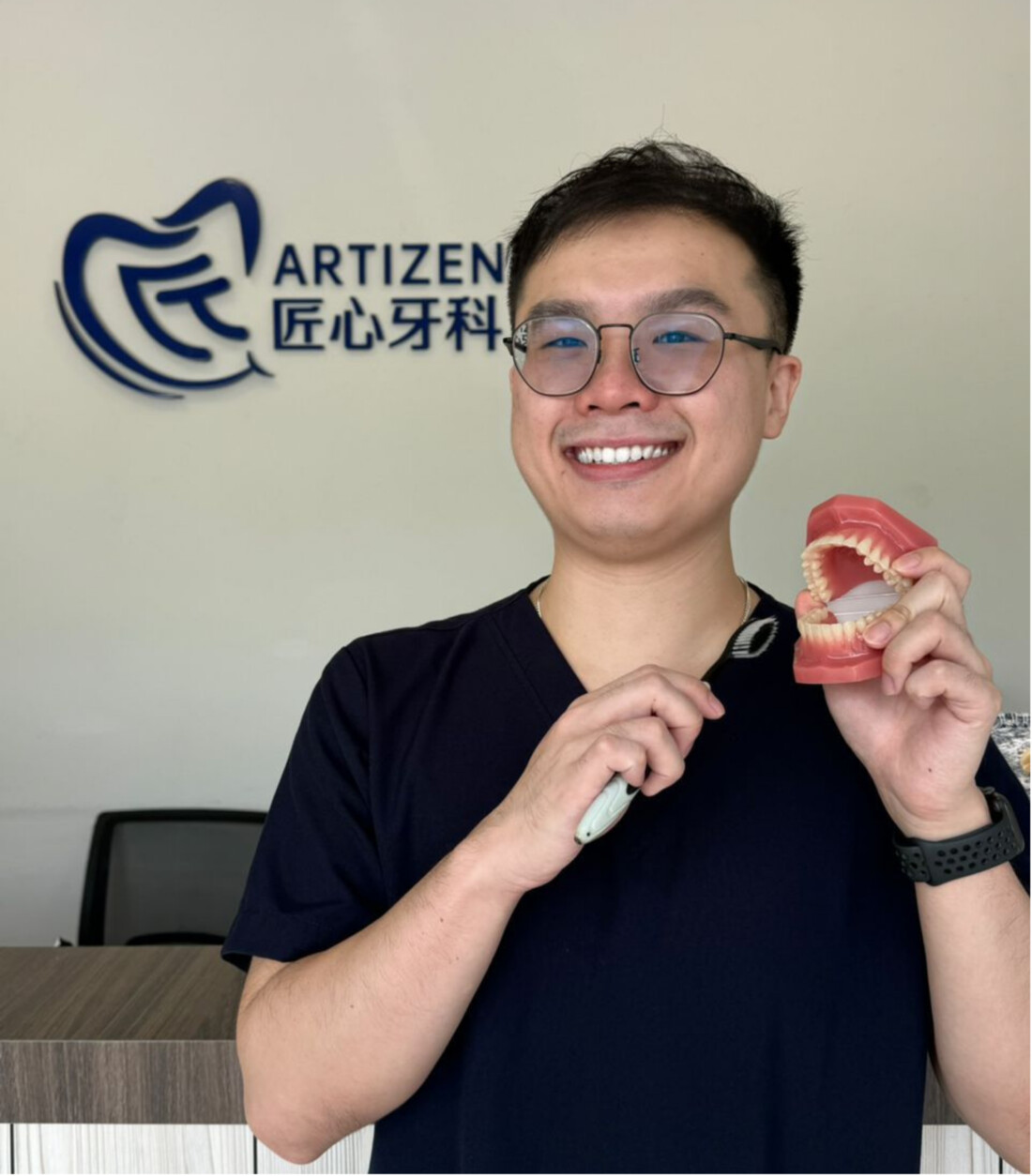
Dr Low provides orthodontic assessment and treatment for teenagers and adults. He works with the wider Artizen team when tooth movement forms part of implant planning or full-mouth rehabilitation.
Personalised dental care
Treatment time and achievable movement vary with anatomy, age, gum health, appliance choice and cooperation. A full orthodontic assessment is required before advice can be personalised.
WhatsApp our team →